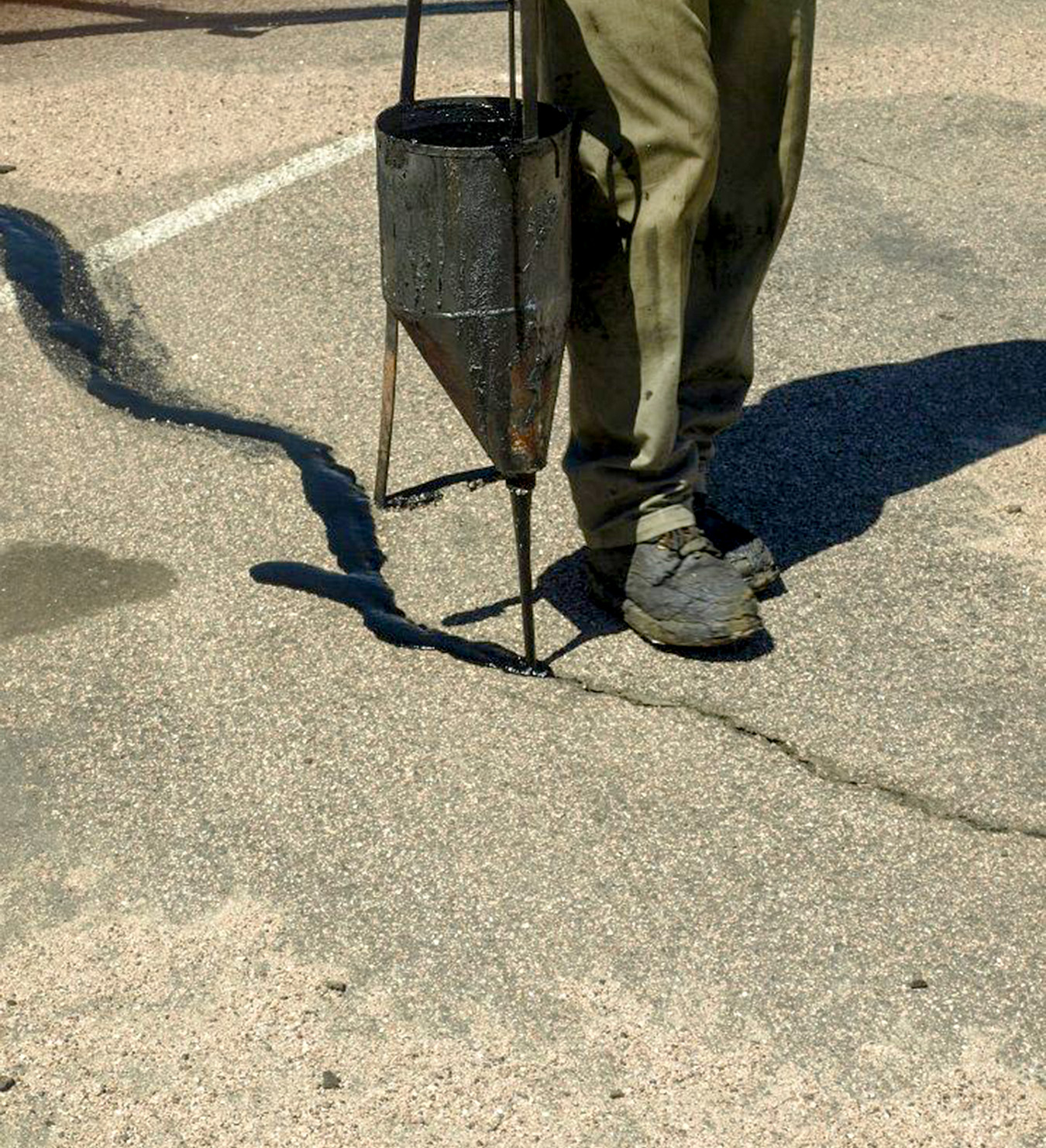
Regular cracksealing is the best use of maintenance dollars. Keeping the water out of the sub-grade (the ground underneath the asphalt) helps prevent excessive cracking (alligatoring), which leads to potholes and eventually to complete pavement failure.

CleaningThe cracks are cleaned of all dirt and loose rock with a compressed air wand (185 CFM trailer mounted compressor). The cracks must be clean and dry so a good bond can be created between the walls of the crack and the hot rubberized crackseal material. If excessive weeds have grown in the cracks, they will be killed with a sterilant several days ahead of the cleaning process. If moisture is observed on the walls of the crack, a heat lance will be used to dry the cracks. |
PouringThe cracks are then sealed with hot rubberized crackseal material. The material’s characteristics meet or exceed all CDOT 3405 specifications. The material is heated to approximately 390° F in an oil-jacketed chamber with an automated agitation system to assure a consistent material temperature. |
SqueegeeThe hot crackseal material is then squeegeed flush with the pavement creating a band of 3″ to 4″ in width. Some settling of the material may occur, but this does not affect the crackseal’s performance. NOTE: Be advised that this process will not fill your crack flush with the asphalt’s surface. It is meant to seal the crack to keep out moisture. |
||
GlenzoilThe Glenzoil application is used under special circumstances. It is a soapy liquid substance that is sprayed over the crackseal material to prevent the crackseal from sticking to tires. This application is used when we are not able to keep traffic off of the lot on days that temperatures are 50 degrees or higher. |